

The Future of the Cybersecurity Workforce in an AI-Driven Era (live Content)


New research shows the cybersecurity workforce is undergoing a major shift as AI transforms security operations. While leaders remain deeply committed to the field, many are facing increasing burnout, evolving skill demands, and growing responsibility for governing AI-driven systems. The future cybersecurity leader will need to balance technical expertise with communication, business alignment, and AI oversight.
Cybersecurity has always been a demanding field. But according to new research, the pressure facing security teams today goes far beyond the typical “skills gap” conversation.
Our 2026 State of the Cybersecurity Workforce Report takes a closer look at how the role of the cybersecurity professional is evolving in an AI-driven landscape. Based on a survey of 300 cybersecurity and IT leaders in the United States, the findings reveal a profession that remains deeply committed to its mission, but one that is increasingly operating under systemic strain.
What emerges is not a story about a lack of talent, but one about a workforce navigating a profound transformation in how security work gets done.
The Hidden Cost of Modern Security Operations
One of the clearest signals from the research is the sheer operational pressure security teams are under.
Cybersecurity leaders report working an average of 10.8 hours beyond their expected schedule each week, effectively creating a “hidden sixth day” of work. For many professionals, this sustained pace has become the baseline rather than the exception.
At the same time, the emotional toll is becoming harder to ignore. A significant portion of leaders report feelings of persistent exhaustion and difficulty disconnecting from work, symptoms of an environment that demands constant readiness.
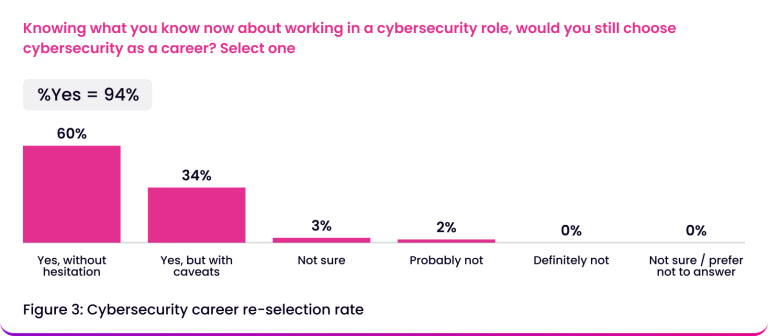
Yet despite these pressures, the overwhelming majority of professionals say they would still choose cybersecurity as a career if given the chance to start over. That level of commitment highlights an important reality: the challenge facing organizations isn’t motivation – it’s sustainability.
The Cybersecurity Skillset Is Expanding
As the nature of security work evolves, so too do the skills required to succeed in the field.
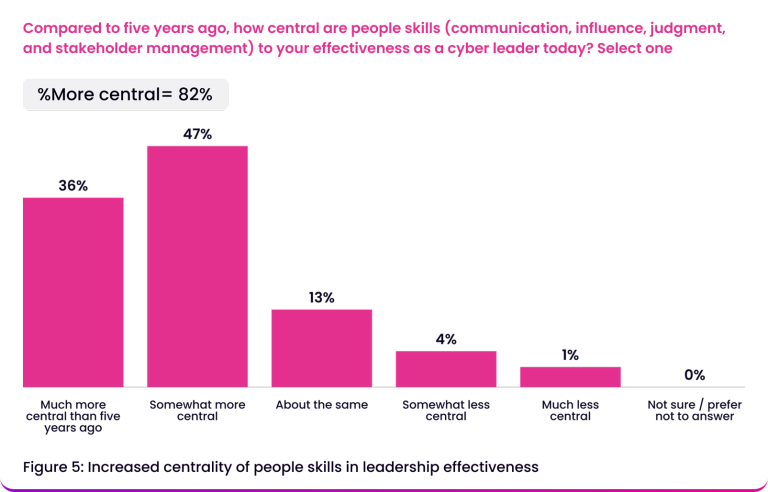
While technical expertise remains essential, cybersecurity leadership is becoming increasingly tied to cross-functional collaboration, communication, and strategic influence. Security teams are now expected to translate complex technical risks into language that resonates with business stakeholders across the organization.
AI is accelerating this shift; as automated tools take on more routine technical tasks, the human role is moving toward interpretation, judgment, and coordination. In other words, cybersecurity leaders are increasingly operating at the intersection of technology, governance, and business strategy.
The Rise of the “Risk Governor”
Perhaps the most notable transformation revealed in the research is the changing profile of the cybersecurity leader.
Historically, the field has rewarded deep technical expertise above all else. But in an AI-driven environment, the defining capability is shifting toward something broader: the ability to oversee and govern complex automated systems.
Leaders are no longer just defending systems manually, they’re responsible for ensuring that intelligent systems operate safely, transparently, and in alignment with business priorities.
This emerging role is less about direct execution and more about governance, accountability, and decision-making in high-speed environments.
AI Investment Is Outpacing Workforce Enablement
The research also highlights a growing disconnect between AI investment and workforce readiness.
Many organizations report that budget is not the primary obstacle to adopting AI capabilities. In fact, a majority say they already have sufficient funding to implement AI features within their security programs.
However, far fewer believe they have adequate training or support structures in place to help professionals effectively collaborate with these systems.
This imbalance creates what the report describes as an execution gap, where sophisticated technology is deployed without the corresponding investment in human expertise needed to govern it effectively.
Trust Remains the Critical Factor
For AI to truly serve as a force multiplier in cybersecurity operations, security leaders must trust the systems they rely on.
The research shows that trust is built on more than just technical performance. Accuracy matters, but so do transparency, accountability, and the ability for humans to intervene when necessary.
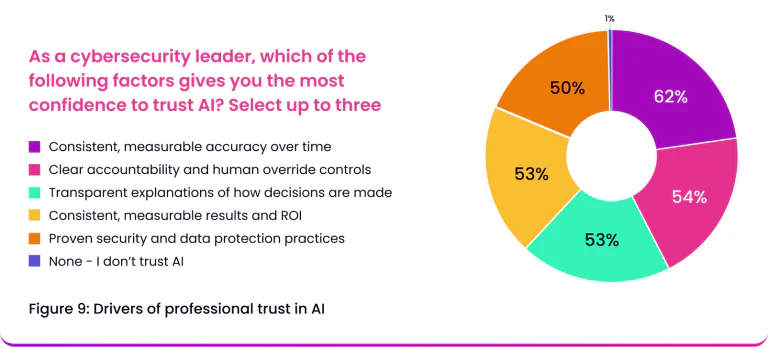
In practice, this means security leaders are not looking to remove humans from the loop. Instead, they want AI systems that augment decision-making while preserving human oversight and control.
A New Model for Sustainable Security
Taken together, the findings point to a broader shift in how organizations must think about cybersecurity operations.
The future of the field will not be defined by choosing between human expertise and automated intelligence. Instead, it will depend on how effectively organizations integrate the two.
That means moving beyond simply deploying AI tools and toward building the governance structures, training programs, and operational models that allow security professionals to work alongside them effectively.
In other words, the next evolution of cybersecurity isn’t just technological, it’s organizational.
Read the full 2026 State of the Cybersecurity Workforce Report to see the data, insights, and recommendations shaping the future of cybersecurity teams.
Stay updated on Seemplicity blog
Subscribe today to stay informed and get regular updates from Seemplicity.